The following list includes technical notes and application notes written by PicoQuant along with our customers. You are invited to download, cite and distribute them. If you would like to contribute with a new topic or application, don't hesitate to contact us.

Technical notes

right arrowTime-Correlated Single Photon Counting

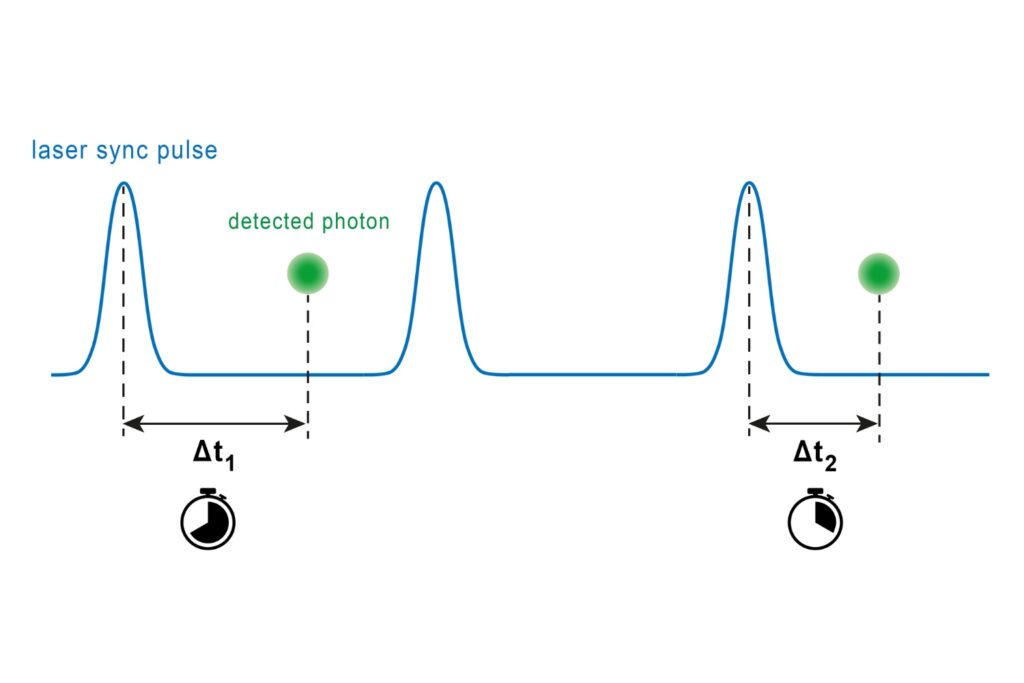
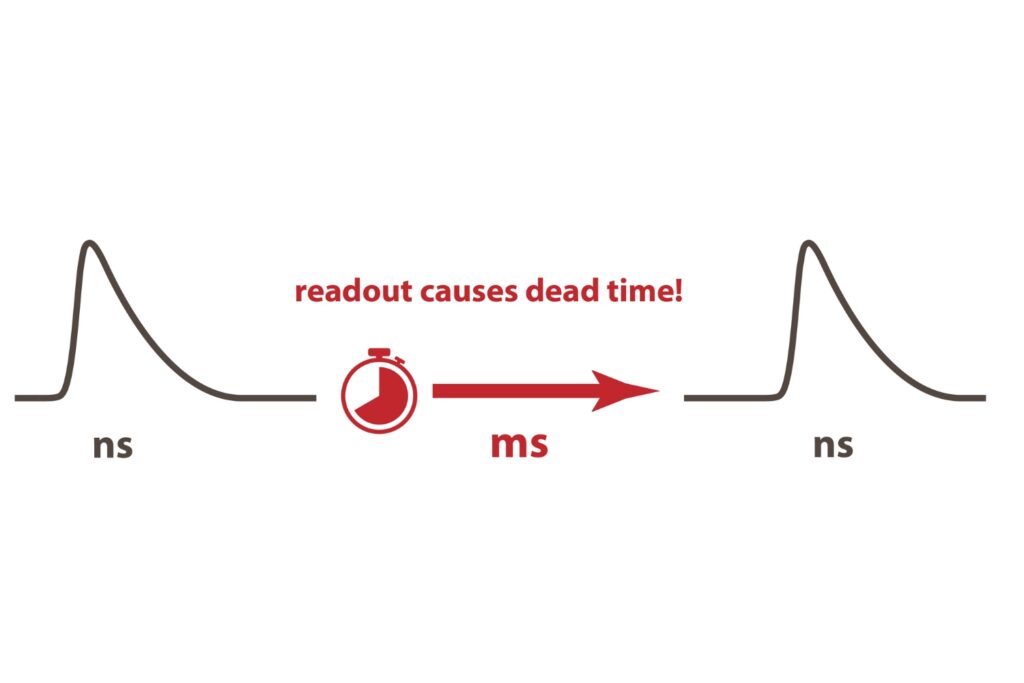
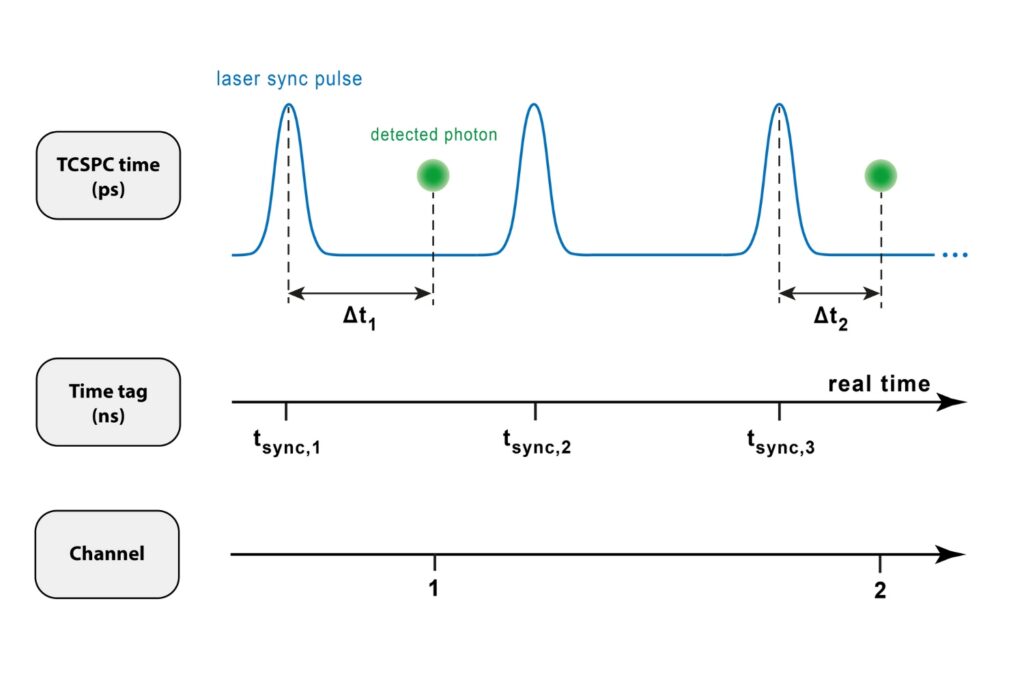
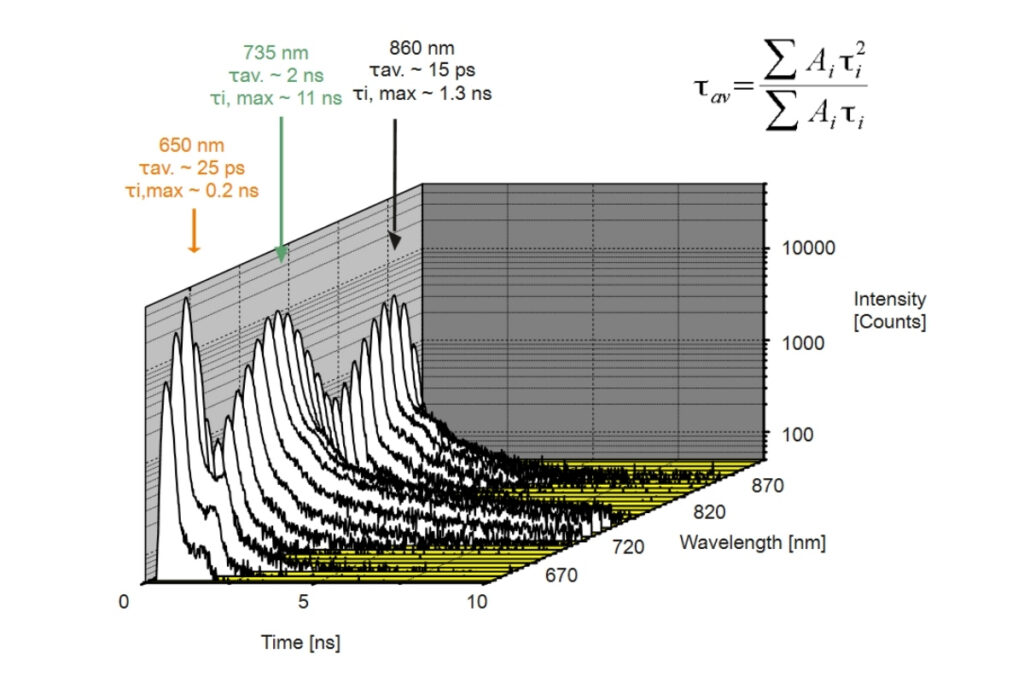
The technical note gives a theoretical overview about Time-Correlated Single Photon Counting (TCSPC). It provides information about basic principles such as count rate statistics, pile-up limitation or reverse start-stop mode. The overall timing resolution (Instrument Response Function - IRF) as well as how individual components of a TCSPC setup contribute to it is also explained.
Download PDF file (0.45 MB)

right arrowTime-Tagged Time-Resolved data acquisition (TTTR)

The technical note gives an introduction into Time-Tagged Time-Resolved (TTTR) fluorescence data collection. It explains the underlying concept and the multiple data analysis possibilities based on this unique data acquisition mode that is exclusively offered by PicoQuant.
Download PDF file (0.3 MB)

right arrowUpgrading Laser Scanning Microscopes with FLIM & FCS

The technical note describes in detail the (possible) components of the FLIM&FCS upgrade kit for Laser Scanning Microscopes (LSMs) as well as the underlying technique of Time-Correlated Single Photon Counting (TCSPC) and the unique Time-Tagged Time-Resolved (TTTR) data acquisition mode used by PicoQuant. It includes special considerations for each supported LSM and shows some experimental results obtained by this setup.
Download PDF file (1.51 MB)

right arrowCompact FLIM NDD Upgrade Kit for the Olympus FluoView FV1000MPE

The technical note describes the necessary technical modification of the Olympus NDD detection unit in order to use the internal PMTs of the FV1000MPE for FLIM imaging. The potential of this set-up for deep-tissue FLIM imaging is explained as well as all technical aspects that lead to a high system integration of the NDD FLIM upgrade in a FV1000MPE. In addition, the performance of the set-up is demonstrated by a FLIM-FRET experiment of a FRET positive cell.
Download PDF file (1.51 MB)

right arrowCombination of pulsed and cw lasers on a Olympus FluoView FV1000 or FluoView FV300

The technical note describes how the simultaneous usage of pulsed (PicoQuant) and cw (Olympus) lasers is realized in the Olympus FluoView FV300 and FV1000. All technical aspects of this special coupling via the IR port using a polarization beam splitter are listed.
Download PDF file (0.5MB)

right arrowROI scanning using pulsed lasers and a Olympus FluoView FV1000 or FluoView FV300

The techical note describes the performance of the PicoQuant pulsed lasers for ROI scanning and bleaching in the Olympus FluoView FV1000. It explains the setup and working principle of the underlying electronic modules and the precise control by the Olympus LSM software laser management system. In addition two typical applications of selective photobleaching and laser ablation are shown.
Download PDF file (0.4MB)

right arrowComparison between SPCM-AQR and PDM SPADs for FLIM

The application note demonstrates the difference in performance of two types of Single Photon Avalanche Diode detectors (SPAD) for FLIM measurements. It explains the experimental setup and compares FLIM results obtained by using either a PDM-SPAD or a SPCM-AQR SPAD. The analysis clearly reveals the advantage of PDM-SPADs over the second detector type for FLIM applications.
Download PDF file (0.31MB)

right arrowPerformance of the PDM SPADs

The technical note describes test measurements using PDM-SPADs to evaluate their performance for both ultrafast single photon counting as well as ultra sensitive fluorescence detection in a single molecule spectroscopy system. A cooled PDM-SPAD detector module with an active area of 50 µm was implemented into two different setups to investigate the sensitivity and timing behavior. The wavelength dependence and influence of the count rate on the IRF was determined in comparison to SPCM-AQR SPADs and a MCP-PMT. In addition, the occurrence of afterpulsing and the impact of focus adjustments on the IRF was analyzed. A FCS measurement of a very diluted fluorophore solution was performed to evaluate the possibility of using the PDM-SPADs in single molecule applications.
Download PDF file (0.23MB)

right arrowSample temperature control system for the MicroTime 200

The technical note describes the implementation of a sample temperature control system from Bioptechs into the MicroTime 200 for single molecule experiments. It explains the pre-requisites of the microscope setup and technical details of the Bioptechs temperature control system. Raster scanning with the objective heater using objective scanning configuration was tested as well as the temperature accuracy and performance of the complete system. As an application example the temperature dependent RNA folding was studied via FRET. In addition, the temperature dependence on the diffusion coefficient was investigated by two-focus FCS (2fFCS). The appendix explains the main installation steps of the sample temperature controller.
Download PDF file (0.68MB)

right arrowAnisotropy measurements using the FluoTime 100

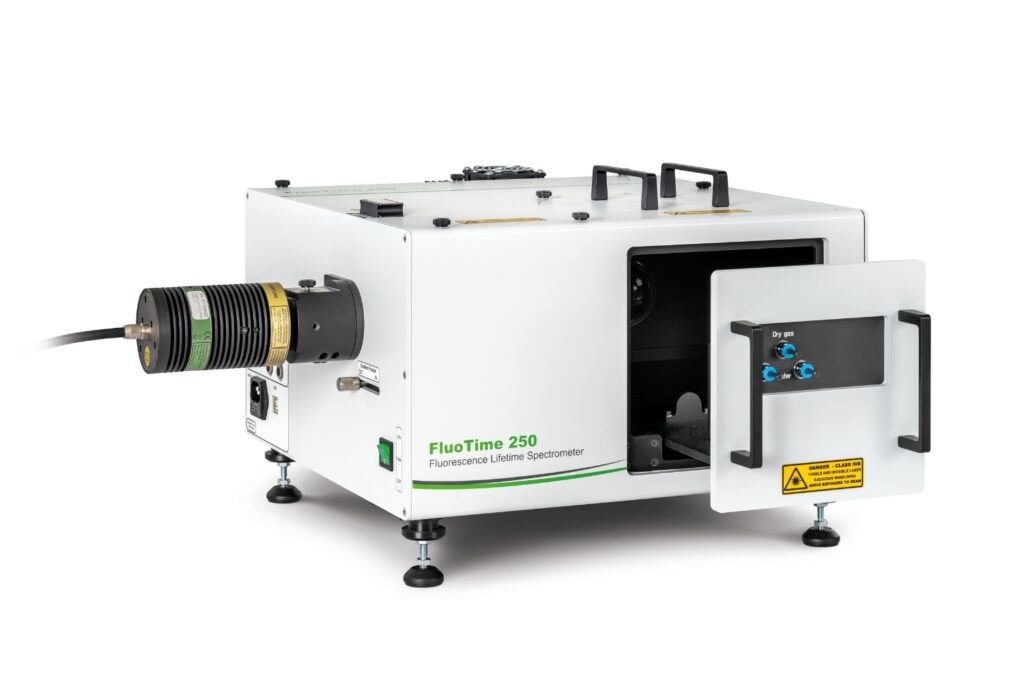
The technical note demonstrates the ease and simplicity of time-resolved anisotropy measurements using the FluoTime 100 fluorescence lifetime spectrometer. It provides a brief explanation of the underlying principle, basic definitions and relations using experimental data as examples. Two data analysis techniques are presented that can easily be adopted for own measurements.
Download PDF file (0.36MB)

right arrowSensitivity of the FluoTime-Series lifetime spectrometers

The application note describes a benchmark test of the two lifetime spectrometers FluoTime 200 and FluoTime 100. Various aspects of fluorescence lifetime measurement of low concentration samples are discussed. The spectrometer sensitivity was evaluated by comparing test results obtained with both spectrometer types using the same sample, excitation source and experimental procedure.
Download PDF file (0.11MB)

right arrowCombining Atomic Force Microsopy (AFM) with confocal microscopy

This technical note describes the realization of the combination between a commertically available AFM (MFP-3D BIO from Asylum Research) and the time-resolved confocal fluorescence microscope MicroTime 200. The synchronization and alignment scheme as well as first results are described.
Download PDF file (1.4MB)
Application notes

right arrowDocumentation of the SymPhoTime demo workspace

This document gives an overview about the wide range of data analysis features offered by the SymPhoTime data acquisition and analysis software. Using a conventional sample and defined acquisition parameters, single analysis features are explained for e.g. FCS, FLCS, FLIM, FLIM-FRET and antibunching. All analysis schemes are based on PicoQuant´s unique TTTR data format offering e.g. spatial, spectral, polarisation and timing information for each detected single photon.
Download PDF file (1.45MB)

right arrowFluorescence (Förster) Resonance Energy Transfer (FRET)

The application note describes the usage of a PicoQuant setup for the study of Förster Resonance Energy Transfer (FRET). Based on a measurement of freely diffusing molecules the experimental details and data analysis are explained.
Download PDF file (0.43MB)

right arrowFRET analysis using Pulsed-Interleaved Excitation (PIE)

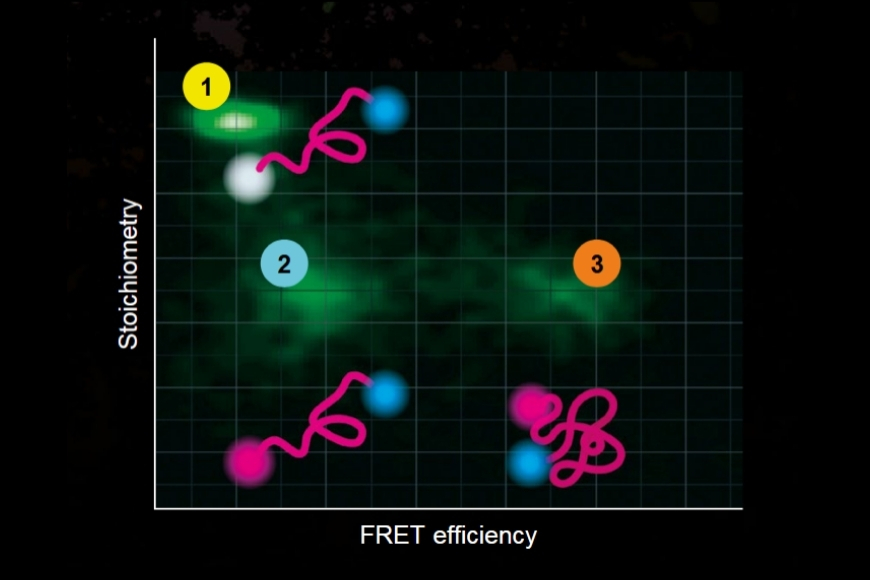
The application note introduces into FRET analysis with pulsed interleaved excitation (PIE) of both the donor and acceptor molecule. This method allows to determine if two molecules undergo FRET or not. Especially it enables to discriminate if the lack of energy transfer is caused by too large distances between both molecules or incomplete FRET pairs with an absent or non-fluorescing acceptor. The document presents an example measurement along with experimental details, analysis and further applications of PIE-FRET.
Download PDF file (0.46MB)

right arrowQuantitative in vivo imaging of molecular distances using FLIM-FRET

The application note provides an introduction into FLIM-FRET experiments and the underlying principle of TCSPC measurement compared to frequency-domain method. The potential of this technique is demonstrated by means of various measurement examples including acceptor photo-bleaching, two-photon excitation and dual-channel detection monitoring both the donor and acceptor simultaneously. In addition, a scripting based FLIM-FRET analysis is applied to separate quenched from unquenched donor species.
Download PDF file (1.1MB)

right arrowFluorescence Lifetime Imaging (FLIM)

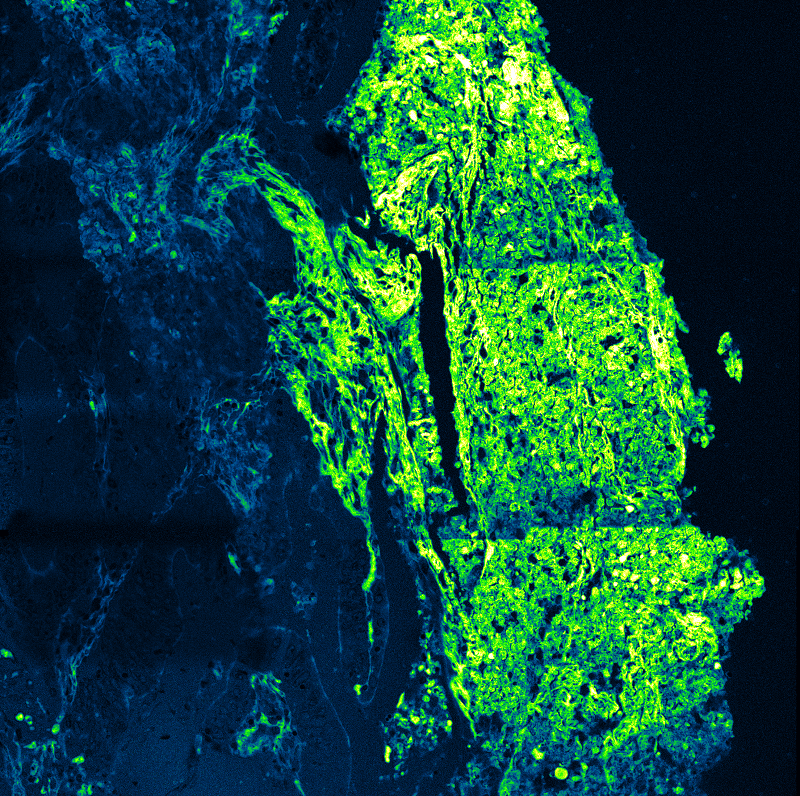
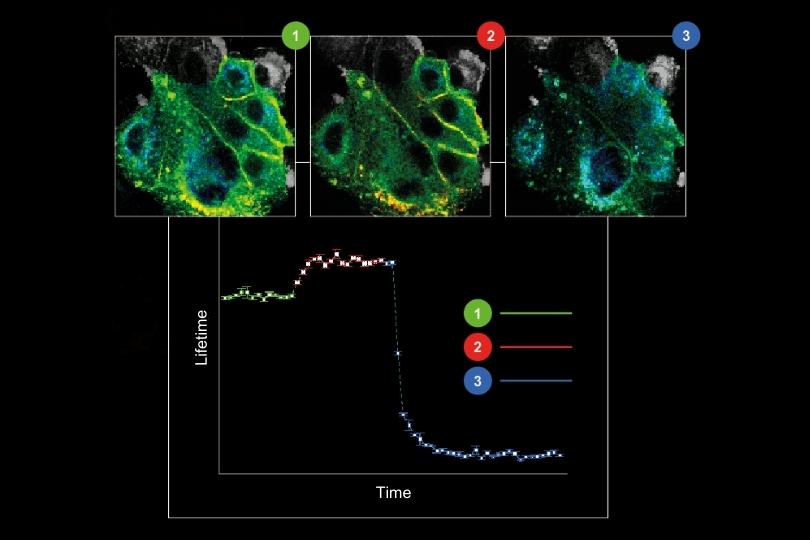
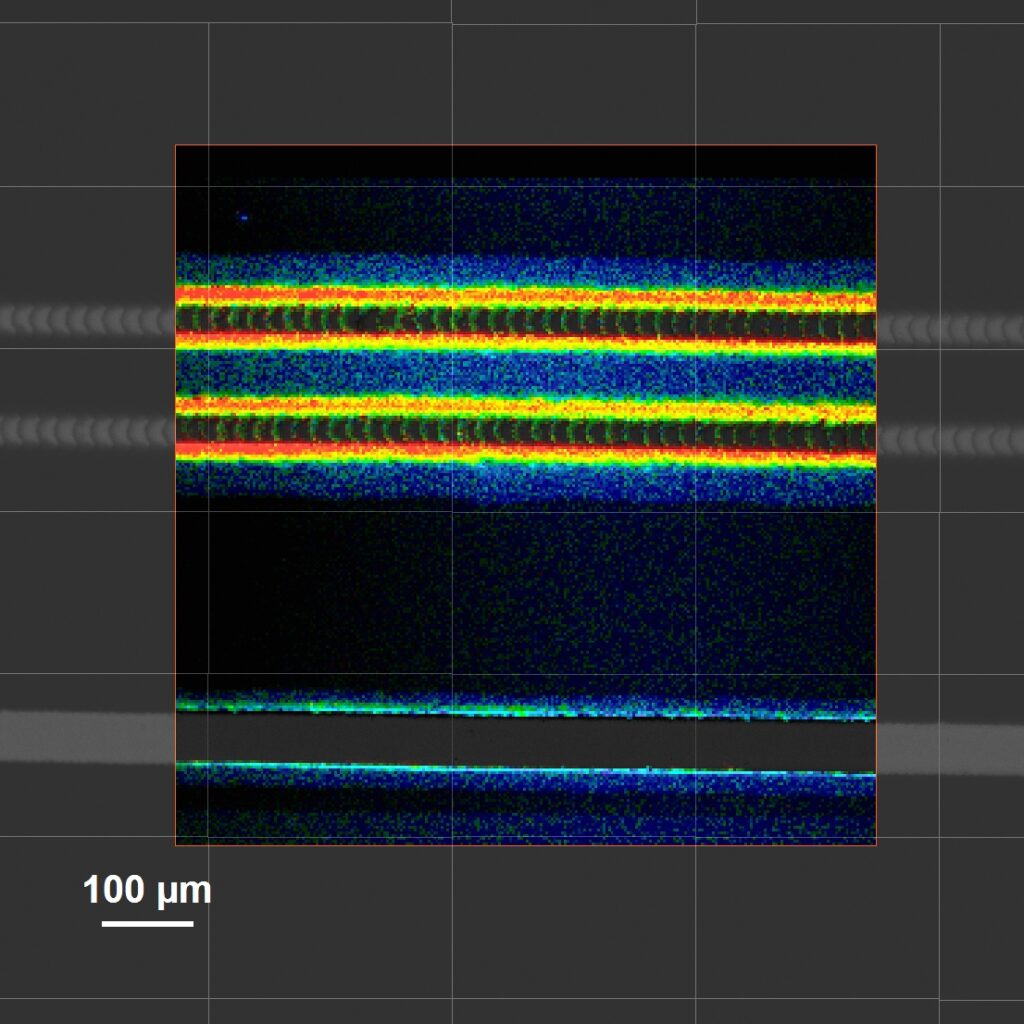
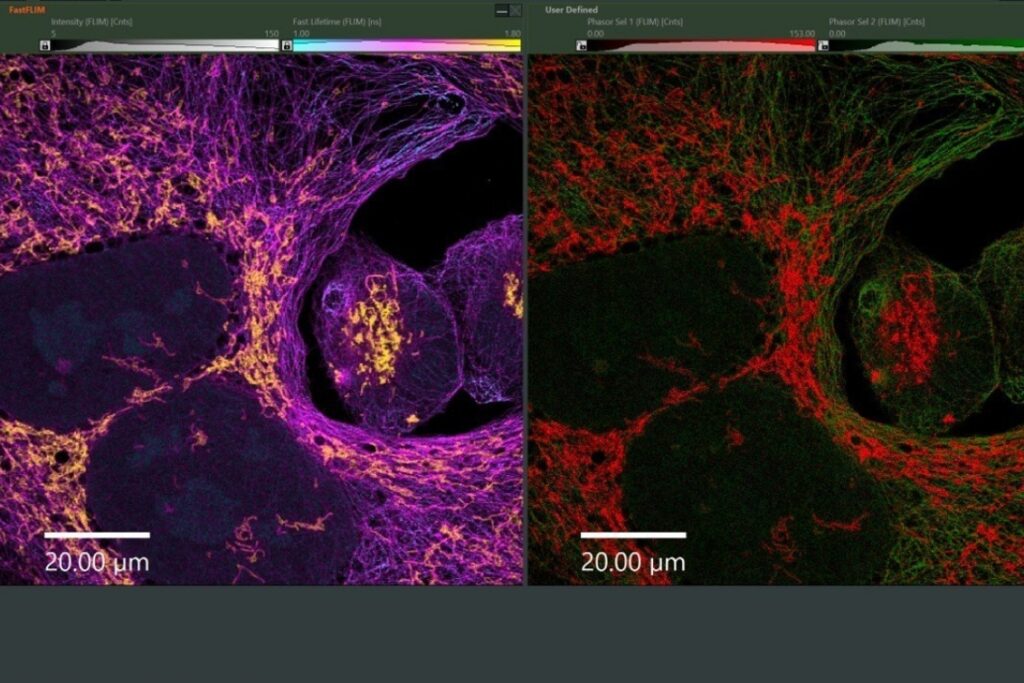
The application note explains Fluorescence Lifetime Imaging (FLIM) based studies of liver cells in order to assess the organization of lipids in cell compartments. The experimental setup as well as the measurement results and calculation of the lifetime image are shown to demonstrate the performance and versatility of the PicoQuant setup
Download PDF file (0.3MB)

right arrowTwo-photon excitation using the MicroTime 200

The application note describes the powerful fusion of fluorescence lifetime imaging microscopy with two-photon excitation (2P-FLIM) using the PicoQuant time-resolved confocal fluorescence microscope MicroTime 200. It shows the experimental setup and performance of the system and presents two examples of quantitative monitoring the intracellular pH and chloride ion concentrations.
Download PDF file (0.54MB)

right arrowTime-gated Fluorescence Correlation Spectoscopy

The application note describes how Time-gated Fluorescence Correlation Spectroscopy can be used for improved concentration determinations. With this method background signal can be eliminated using pulsed laser excitation and TCSPC for data acquisition. The document introduces the principles of Time-gated FCS and the realization by the PicoQuant setup. An example demonstrates that accurate concentration measurements free of scattered light artifacts are possible using this method.
Download PDF file (0.22MB)

right arrowFluorescence Lifetime Correlation Spectroscopy (FLCS)

The application note gives an introduction into the principle of Fluorescence Lifetime Correlation Spectroscopy (FLCS) and highlights remarkable features of this method. Measurement examples of quasi-multichannel detection as well as suppression of scattered light and various parasitic contributions are shown. FLCS uses picosecond time-resolved fluorescence detection to separate different FCS contributions without the need of fitting to a multi-exponential model which leads to improved concentration measurements.
Download PDF file (0.21MB)

right arrowFLCS analysis using the SymPhoTime

The application note provides a tutorial for Fluorescence Lifetime Correlation Spectroscopy analysis using the SymPhoTime software. The key feature of this method is the possibility to separate the autocorrelation function of various signal components allowing for more accurate concentration measurements at higher dilutions compared to classical FCS. Three examples are listed in order to demonstrate how FLCS is used for separating the contribution of two fluorophores in a mixed sample, to eliminate scattered excitation light and to remove detector artefacts like dark counts and afterpulsing.
Download PDF file (0.49MB)

right arrowQuantitative Fluorescence Correlation Spectroscopy

The quantitative analysis of FCS measurements strongly rely on the size of the confocal volume which has to be determined experimentally. This application note describes three methods to determine the confocal parameters for quantitative FCS. The results of the measurements are compared to each other in respect of their applicability for quantitative determination of concentration and diffusion constants. Experimental details along with theoretical and practical results are given.
Download PDF file (0.64MB)

right arrowTwo-Focus Fluorescence Correlation Spectroscopy (2fFCS)

In contrast to conventional FCS two-focus FCS (2fFCS) is robust against typical artefacts thus allowing to measure absolute values of diffusion coefficients without referencing against a calibration sample with known diffusion coefficient. The application note gives a theoretical overview about 2fFCS and explains the setup and working principle of the used PicoQuant instruments. It explains how the inter-focal distance can be determined to exactly evaluate 2fFCS measurements. Based on measurement examples it further demonstrates that 2fFCS is independent of optical saturation and refractive index mismatch that negatively affect single-focus FCS measurements.
Download PDF file (0.55MB)

right arrowAnalysis of 2fFCS data using SymPhoTime and MatLab

The application note provides a tutorial for 2fFCS(dual-focus Fluorescence Correlation Spectroscopy) analysis using both the SymPhoTime and MatLab software. All prerequisites and a step-by-step procedure are explained. The determination of the exact lateral distance between two foci is demonstrated by measuring the absolute diffusion coefficient of a reference sample. Properties of several reference compounds suitable for calibration purpose are summarized.
Download PDF file (0.45MB)

right arrowAbsolute Diffusion Coefficients: Compilation of Reference Data for FCS Calibration

The application note summarizes precise diffusion coefficients of several reference compounds which are used to exactly calibrate size and shape of the confocal volume. In this way, absolute diffusion constant and concentration values can be obtained by FCS measurements. Furthermore, the temperature dependence of the diffusion coefficient as well as the influence of viscosity is demonstrated.
Download PDF file (0.24MB)


Home PicoQuant GmbH
Rudower Chaussee 29 (IGZ)
12489 Berlin
Germany
Phone:  ++4930 6392 6929
Fax: ++4930 6392 6561
Email: infopicoquant.com
WWW: http://www.picoquant.com